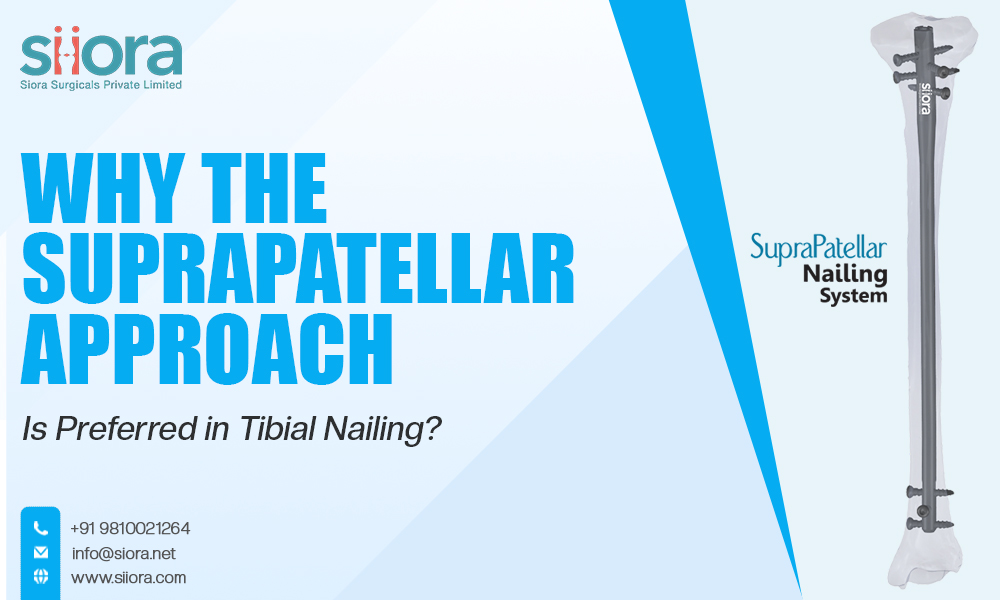
Tibial fractures demand precise fixation, and the suprapatellar nailing approach has surged in popularity among orthopedic surgeons. It edges out the traditional infrapatellar method by simplifying fracture alignment and cutting down on common pitfalls like knee pain. This technique uses a knee position of 10-30 degrees flexion to guide the nail straight into the bone’s sweet spot.
Decoding the Suprapatellar Edge
Tibial shaft breaks from falls, crashes, or sports often need nailing to realign bone ends and speed healing. The old-school infrapatellar route pokes below the kneecap, forcing 90-degree knee bends that tug on muscles and skew the nail path. Suprapatellar slips above the patella into the trochlear groove, letting surgeons eyeball the perfect entry while the leg stays semi-straight—think less wrestling with stiff limbs mid-surgery.
Easier Reductions, Better Alignment
Proximal or distal tibial fractures love this approach because the relaxed quads don’t yank the top fragment forward into an awkward apex bow. Surgeons manipulate joysticks or clamps effortlessly in that semi-extended setup, nailing spot-on reductions without prying open soft tissues. Studies clock malalignment drops—coronal plane errors plummet, especially in tricky distal breaks—yielding straighter legs and fewer revision ops.
Less Pain and Quicker OR Time
Patients rave about dialing back anterior knee ache, a notorious infrapatellar gripe from tendon scarring or hardware irritation. Functional scores pop higher at three months, with suprapatellar folks scoring 76 versus 71 on lower extremity metrics—no small win for getting back to stairs or squats. Operating rooms wrap faster too: fluoroscopy zaps shrink by minutes, slashing radiation for everyone, plus lower blood loss from tiny incisions.
Key perks stack up like this:
- Knee at 20 degrees kills quadriceps pull, straightening proximal fragments.
- Trochlear notch self-guides the nail, dodging patella blocks.
- Semi-extension eases percutaneous tools for spot-on tweaks.
Surgical Nuts and Bolts
Prep involves a 3-4 cm cut superomedial to the patella, splitting the quad tendon minimally or using a portal to protect it. Ream the canal, slide the nail home retrograde-style if needed, lock proximally and distally—done. No hyperflexion contortions mean smoother for obese patients or bilateral cases, with union rates holding steady at 95% or better.
Outcomes That Stick
Meta-analyses crunch the numbers: suprapatellar wins on knee function, ankle scores, and malunion risks, no spike in complications like infections. Mid-term checks show durable fixes, less limp, and happier returns to work or trails. Even for shaft fractures, it trumps infrapatellar by nixing entry-point woes that plague 20-30% of classic nails.
Weighing It for Your Practice
Not every tibia suits it—rigid proximal thirds or open wounds might flip back to infrapatellar—but for most closed or Gustilo I-II breaks, this shift feels like upgrading from a clunky bike to a smooth cruiser. Teams adopting it report steep learning curves only for the uninitiated, then seamless flow. Patients dodge chronic kneelies, surgeons wrap early—win-win in trauma bays racing the clock.
Bottom line, suprapatellar nailing flips the script on tibial fixes by prioritizing precision and comfort without extra hassle. It’s no fad; it’s reshaping OR standards for fractures that once fought back.
To get a world-class range of Suprapatellar Nailing System and other orthopedic implants, contact Siora Surgicals Pvt. Ltd.
 Siora Surgicals Pvt. Ltd.